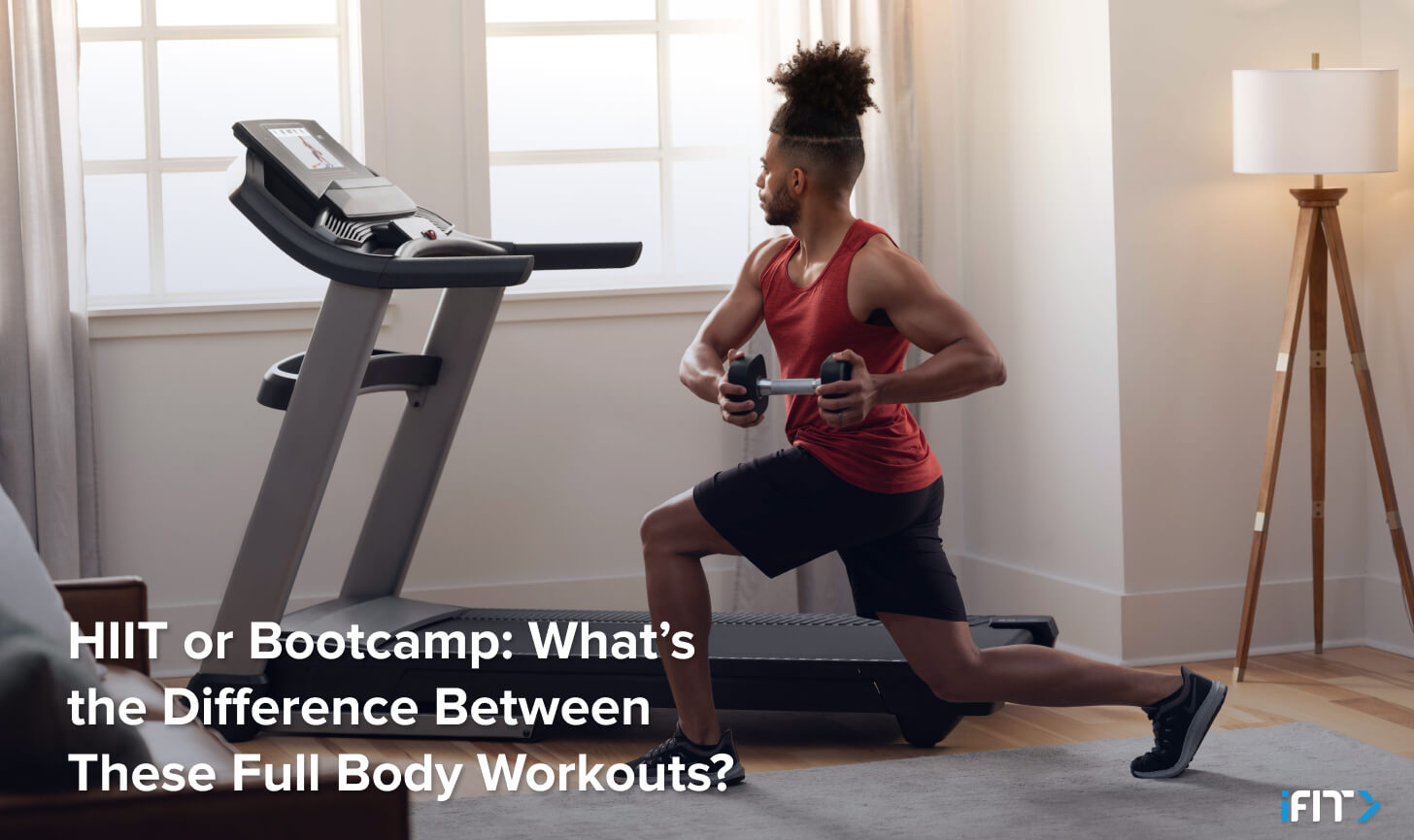
HIIT or Bootcamp: What’s the Difference Between These Full Body Workouts?
If you're not familiar with HIIT and bootcamp workouts, they're two of the most popular workout types in the fitness world today. They typically incorporate full body movements that are fast paced and use your own bodyweight, creating a serious cardio challenge for even the most seasoned athletes. Without the use of equipment, these types of workouts are quite accessible, making them a sought-after workout option for people worldwide.
Bodyweight exercises are often underrated as they may not look as impressive as a heavy barbell squat or bench press. However, full body exercises that use your own weight, like jumping lunges, mountain climbers, and burpees, are just as effective in helping you reach your goals and improve your fitness level.
While many people swear by the benefits of separating workouts by muscle group (i.e. upper body, lower body, and abs), workouts that target multiple muscle groups at once, like HIIT and bootcamp, can burn the same amount of calories, if not more.
HIIT and bootcamp workouts often target your full body, which includes all of your major muscle groups. So, you’ll exercise your legs, arms, and core at the same time. Although similar, HIIT and bootcamp are not synonymous with one another. We’re taking a look at each of these workout types, highlighting what makes them worthwhile options for your next full body workout. Once you’ve learned more about HIIT and bootcamp, you can get started on a new fitness routine with iFIT full body workouts!
What’s a HIIT workout?
High-intensity interval training, or HIIT, is a type of workout that kicks up the tempo and makes you work hard to reach the end. A typical HIIT workout includes full body exercises like burpees, inchworms, squats, push-ups, and more. While HIIT workouts primarily involve sprints and jogging, they can also consist of cardio and strength training.
What are some distinguishing characteristics of a HIIT workout? Your target heart rate during these workouts should be higher than it is during other cardio workouts. You should be breathing hard, sweating, and feeling depleted by the end of your workout. Because of the intensity of HIIT, the workouts are designed and intended to be short, accompanied by appropriate recoveries to help you maximize performance.
When time is of the essence, HIIT full body workouts can bring the sweat-inducing exercise you want without spending over 30-35 minutes, excluding warmup and cooldown time. They can easily be done as a home workout or in a studio with a larger class. You don’t necessarily need a personal trainer to get a great HIIT workout in. Best of all, with quick HIIT workouts1, you can build your cardiorespiratory fitness right in your living room.
HIIT workouts with iFIT
You’ll find a variety of HIIT full body workout series on our fitness app, with locations ranging from the iFIT Studio to beautiful destinations all over the globe. Here are a few HIIT workout series for you to check out:
- Intro to HIIT Series with iFIT Trainer Ashley Paulson
- Bolivia Beginner Cardio HIIT Series with iFIT Trainer Hannah Eden
- Motivational HIIT Series with iFIT Trainer Dewayne Montgomery
- Red Rock HIIT Series with iFIT Trainer Jonnie Gale
- Vietnam Intermediate Cardio HIIT Series with iFIT Trainer Hannah Eden
Each of these full body workout series are structured, challenging, and should leave you feeling drained!
What’s a bootcamp workout?
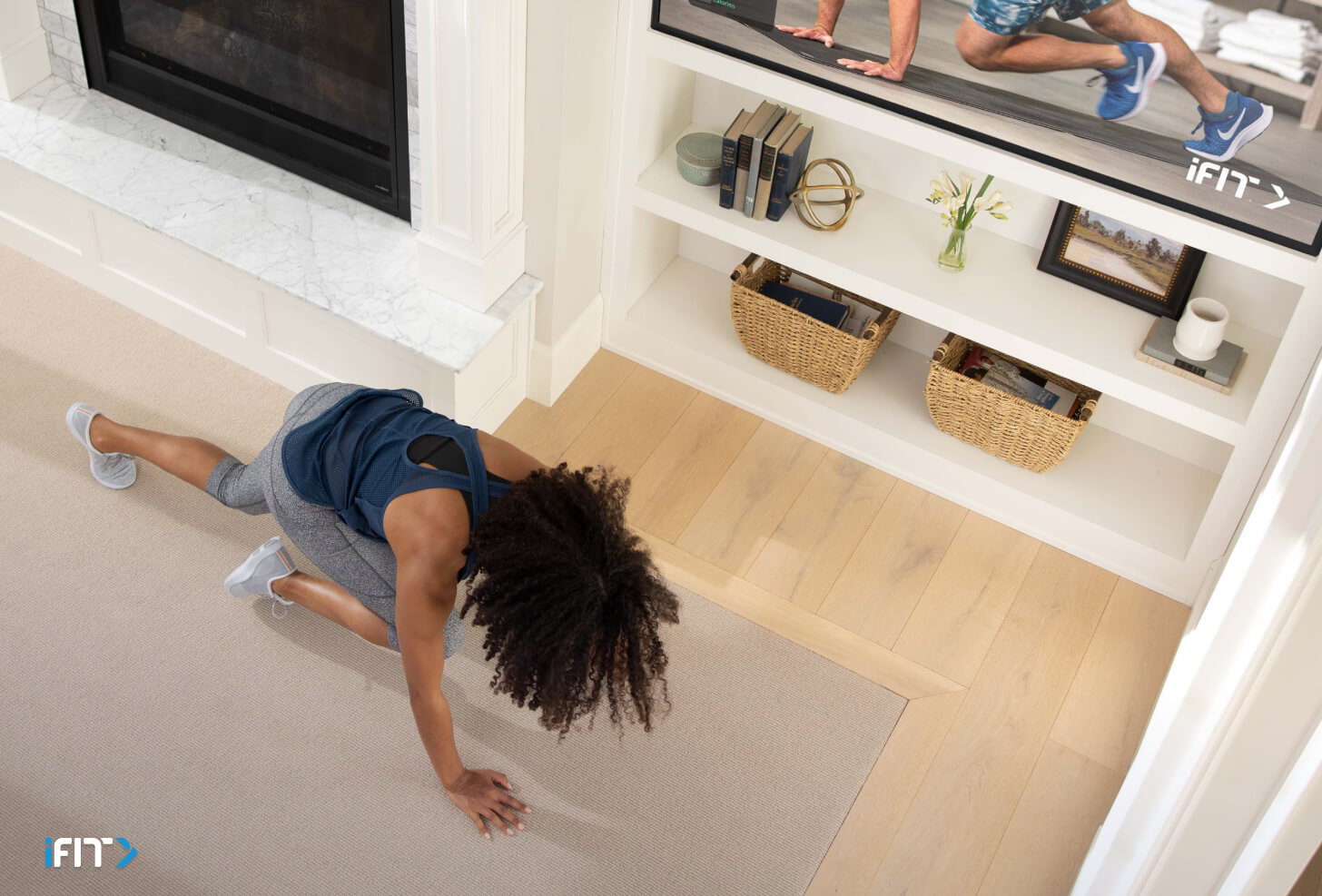
Is the military the first thing you think of when you hear “bootcamp?” If so, you’re right! Taking a few pages out of the military’s playbook, bootcamp full body workouts use calisthenic exercises like push-ups and lunges to create a high-intensity workout experience. While many bootcamp workout routines use bodyweight, others throw equipment like dumbbells or kettlebells into the mix.
Though similar to HIIT workouts, bootcamp workouts have a few distinctive characteristics. Typically, they’re led by a personal trainer or coach. During the workout, the trainer will guide you through different exercises and call out the next exercise so you know when to move and when to take a breath.
Also, bootcamp workouts are usually longer. An average class can range as long as 45-60 minutes, which may not be the best option for those new to fitness or those returning after an extended break or injury. However, the longer duration makes them slightly less intense than a HIIT workout. Since they are longer in duration than typical HIIT workouts, bootcamp workouts often have longer rest periods to accompany the lengthier workout session.
Bootcamp workouts with iFIT
If you’ve built up your stamina, iFIT bootcamp workouts may be a great challenge for you. One of our most popular bootcamp workout series—the French Polynesia Bootcamp Series—takes you to French Polynesia with iFIT Trainer Elyse Miller. Filmed in gorgeous locales, this workout series will make you work for those spectacular tropical views! Love workouts like these? There are so many more where that came from! Here are a few other bootcamp full body workouts that will put your fitness to the test:
- Bora Bora Bootcamp Series with iFIT Trainer Stacie Clark
- Level-Up Bootcamp Series with iFIT Trainer Jonnie Gale
- Next-Level Bootcamp Series with iFIT Trainer Paulo Barreto
- Test Your Limits Bootcamp Series with iFIT Trainer Gideon Akande
These full body series should help you get into bootcamp shape! With your own iFIT personal trainer, you’ll work through curated sequences of bodyweight and cardio exercises that will improve your cardiovascular health, tone muscle, and get your body moving.
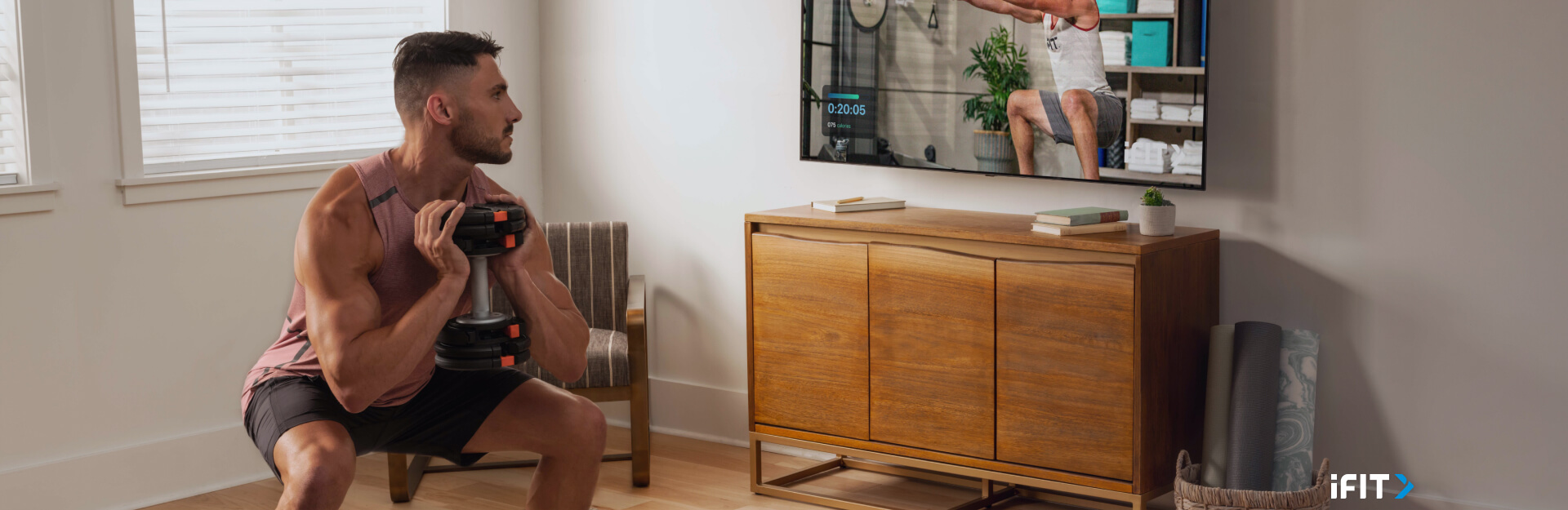
How often should I do a full body workout?
As you may already know, overuse injuries can arise from training too fast or too often. Naturally, this may be a concern of yours when thinking about exercising your entire body in a single workout.
When it comes to full body classes, how many times a week should you do them? Will once a week suffice, or does that number need to increase to see results? Unfortunately, there’s not an easy, one-size-fits-all solution. You’ll find our recommendation down below, but it really depends on the person.
In a study2 comparing split-body workout routines and total-body workout routines, the participants were separated into two groups—split-body and total-body. The split-body participants trained muscle groups one day a week versus the total-body group, which trained three days a week. At the end of the study, the total-body group showed greater muscle thickness, which may suggest benefits to higher frequency resistance training during the week. For this study, the full body workouts were the better option for muscle gain.
So, how often should you do a full body workout? We’d recommend between 2-4 workouts per week, but ultimately, the best course of action is to listen to your body. If you’re feeling worn down, take a rest day and come back the following day (or the next) when you feel more refreshed. Also, it’s not a bad idea to break up your full body routine with isolated workouts, alternating between targeting your full body versus zoning in on specific muscle groups.
Can I build strength and muscle with full body workouts?
While they’re effective for cardiovascular health, full body workouts can also help you work on strength and build muscle. Another study examined the effect strength training frequency3 has on lean mass and strength. The high-frequency training group (HFT) trained each muscle group three days a week, whereas the low-frequency training (LFT) group trained just once a week.
Over the course of eight weeks, the HFT and LFT group’s training routines focused on the pectoralis muscles, upper back, quadriceps, gastrocnemius, deltoids, biceps, triceps, and hamstrings. At the end of the strength training trial, researchers found no significant differences between the high-frequency and low-frequency groups. Each group had improvements in lean mass and strength! The LFT group shows us that full body training even just once a week can result in muscle and strength improvements.
While it’s great to push yourself, it’s also important to know when to stop and reset. When coupling HIIT or bootcamp workouts with iFIT walking, running, or hiking workouts, you’ll need those two days of rest or longer, depending on how long you need to recuperate.

Try an iFIT full body workout
If you’re ready to join a HIIT or bootcamp full body workout series, iFIT offers a great selection of each workout type. When you download our fitness app and sign up for iFIT, you’ll gain access to an incredible selection of full body workouts. Each of these workouts is led by an iFIT Trainer who will educate you and continue to motivate you with every workout. Simply choose a workout that suits your style and level to start your fitness journey.
iFIT offers a host of workout series that will keep you engaged and excited. The best full body workouts are those that make you feel empowered at the end, no matter the duration or difficulty. From short 20-minute workouts to longer ones, the iFIT app is a full body app that offers a variety of workout series. Whether you’re a beginner or more experienced, our personal trainers will be there for you to follow during your workouts, helping you on your journey to becoming a better version of yourself!
References
1. Sabag, A., Little, J. P., & Johnson, N. A. (2021, March 24). Low‐volume high-intensity interval training for cardiometabolic health. The Physiological Society. https://physoc.onlinelibrary.wiley.com/doi/10.1113/JP281210.
2. Schoenfeld, B. J., Ratamess, N. A., Peterson, M. D., Contreras, B., & Tiryaki-Sonmez, G. (2015). Influence of resistance training frequency on muscular adaptations in well-trained men. Journal of Strength and Conditioning Research, 29(7), 1821–1829. https://doi.org/10.1519/JSC.0000000000000970.
3. Thomas, M. H., & Burns, S. P. (2016). Increasing lean mass and strength: a comparison of high frequency strength training to lower frequency strength training. International Journal of Exercise Science, 9(2), 159–167. https://www.ncbi.nlm.nih.gov/pmc/articles/PMC4836564/.
Disclaimer: This blog post is not intended to replace the advice of a medical professional. The above information should not be used to diagnose, treat, or prevent any disease or medical condition. Please consult your doctor before making any changes to your diet, sleep methods, daily activity, or fitness routine. iFIT assumes no responsibility for any personal injury or damage sustained by any recommendations, opinions, or advice given in this article. Always follow the safety precautions included in the owner’s manual of your fitness equipment.
You might also like

Strength Training While on GLP-1: A 6-Week Plan
When your body weight changes, you aren’t just losing fat—research shows you risk losing lean muscle mass, too. Protecting that muscle is the key to maintaining your metabolism and everyday strength. This practical 6-week guide breaks down exactly how to structure a simple, 20-to-30 minute full-body strength routine 2–3 times a week. Built around foundational compound movements like squats and rows, this plan shows you how to safely implement progressive overload without burning out your energy. Give your body a clear signal to keep its muscle and build a routine that sticks.
May 26, 2026

Find Your Stride with Tommy Rivs in the Joy of Running Part 2: Redwoods, Workouts 1-10
There’s just something magical about taking your next step forward, especially when it means you’re surrounded by the towering redwoods and rugged beauty of California’s northern coast. iFIT Trainer Tommy Rivs’ newest series will help you experience the magic of this region with the Joy of Running Part 2: Redwoods, Workouts 1-10. This beginner-friendly program is designed to help you progress from walking to running at your own pace.Explore California’s Scenic CoastSet along breathtaking coastal trails and through scenic redwood groves, this series brings the natural beauty of Northern California to your treadmill. From the peaceful paths of Laguna Point to the rolling meadows of Mendocino Headlands, each workout is an opportunity to breathe, move, and connect with the pure joy of movement.Make Progress with Tommy RivsKnown for his thoughtful coaching and love of movement, Tommy Rivs will guide you through a mix of walking and running intervals to gradually build your endurance and confidence. Each workout keeps the speed steady while changing your movement so you can focus on how your body feels and adapts as you move.Whether you’re returning to fitness or taking your first steps toward running, this series is all about moving forward with purpose. Tommy will help you to:Develop endurance and build strength with progressive intervalsImprove your form and consistency with his expert guidanceReconnect with the joy of movement in an inspiring settingBuild confidence to take on your next running challengeThis is only the beginning; there’s so much more to come with Rivs. For now, lace up those shoes and join him for an incredible journey amongst the redwoods.Join Tommy Rivs in the Redwoods
November 3, 2025
.jpg&w=3840&q=75)
Trainer Games Complete Collection: Every Workout. Every Episode. One Epic Experience.
Experience the full intensity of Trainer Games in one place. The Trainer Games Complete Collection brings every episode, workout, and behind-the-scenes moment together inside the iFIT fitness app, so you can train, watch, and stay inspired alongside elite trainers from start to finish.
February 16, 2026